
TARARA GUIDE
Porcelain vs Ceramic Tiles: Which Is Right for Your Home?
A master tiler’s plain-English guide to the difference, and where each one belongs.
Porcelain or ceramic? It’s the question almost every tiling project starts with, and the showroom won’t always give you a straight answer. The short version: they’re cousins, not opposites. Both are clay tiles fired in a kiln, but porcelain is denser and tougher, while ceramic is lighter and easier on the budget. Which one is right depends entirely on where it’s going.
What’s actually the difference?
Both are made from clay and fired, but porcelain is made from a finer clay and fired hotter and longer. That makes it denser, harder and far less porous. It absorbs very little water, which is why it’s the go-to for wet and high-traffic areas. Ceramic is fired at a lower temperature, so it’s a little softer and more absorbent, but also lighter and easier to cut.
For a homeowner, the practical takeaway is simple: porcelain shrugs off water and wear, while ceramic is gentler and cheaper but wants a drier, lower-traffic spot.
Where porcelain wins
Because it’s so dense and water-resistant, porcelain is the natural choice for:
- Floors, especially bathrooms, kitchens, hallways and anywhere with foot traffic.
- Wet areas: shower floors and walls, where low water absorption matters.
- Outdoor and pool surrounds: porcelain rated for outdoor use handles Auckland’s weather far better.
- Large-format tiles: its strength lets it hold together in big sheets with fewer grout lines.
The trade-off is that porcelain is harder to cut and heavier to work with, which is part of why installation is a job for someone who does it every day.
Where ceramic makes sense
Ceramic isn’t the poor cousin; in the right place it’s the right tool:
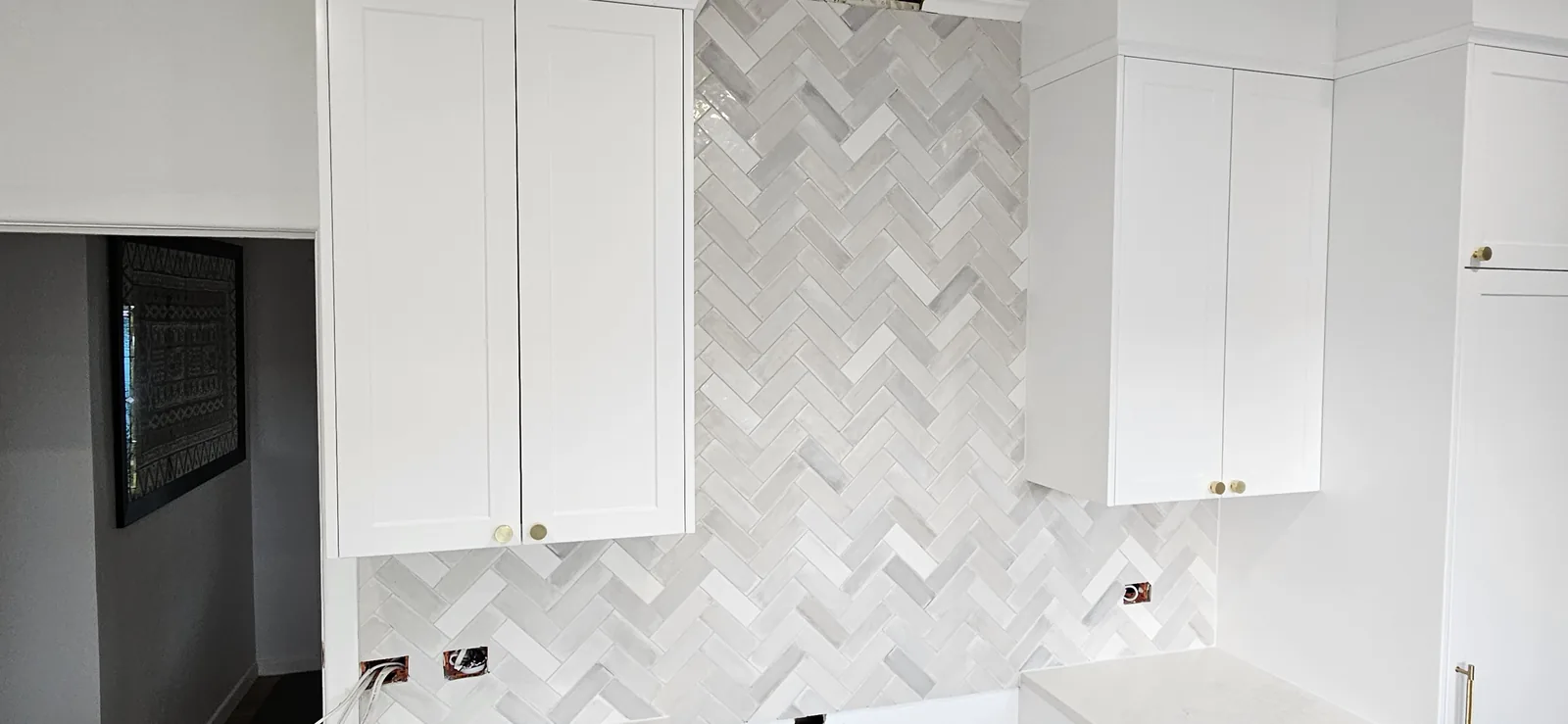
- Walls: bathroom walls, splashbacks and feature walls, where it isn’t taking foot traffic.
- Budget-conscious projects where the tile isn’t in a wet or high-wear spot.
- Intricate patterns and colours: ceramic is easier to cut and comes in a huge range of glazes, so it’s great for decorative work.
A very common, sensible combination is porcelain on the floor and ceramic on the walls. Durability where it’s needed, savings where you can.
What about the cost?
As a rule, ceramic costs less per square metre than porcelain, both to buy and sometimes to install. But the gap is often smaller than people expect, and ceramic in the wrong place (a busy floor, a shower) can cost far more in the long run when it wears or fails. The tile itself is usually a modest slice of a project’s total cost; the preparation, waterproofing and workmanship are where the real value sits.
Don’t forget slip resistance
One thing the porcelain-versus-ceramic question often skips: how slippery the tile is when wet. It matters most on bathroom floors, wet-room showers and any outdoor or pool area. Tiles carry a slip-resistance rating, and a polished tile that looks great on a wall can be the wrong choice underfoot in a wet space. For floors that get wet, we’ll steer you toward a finish with enough grip, usually a matt or textured porcelain, so the room is as safe as it is good-looking.
What about natural stone?
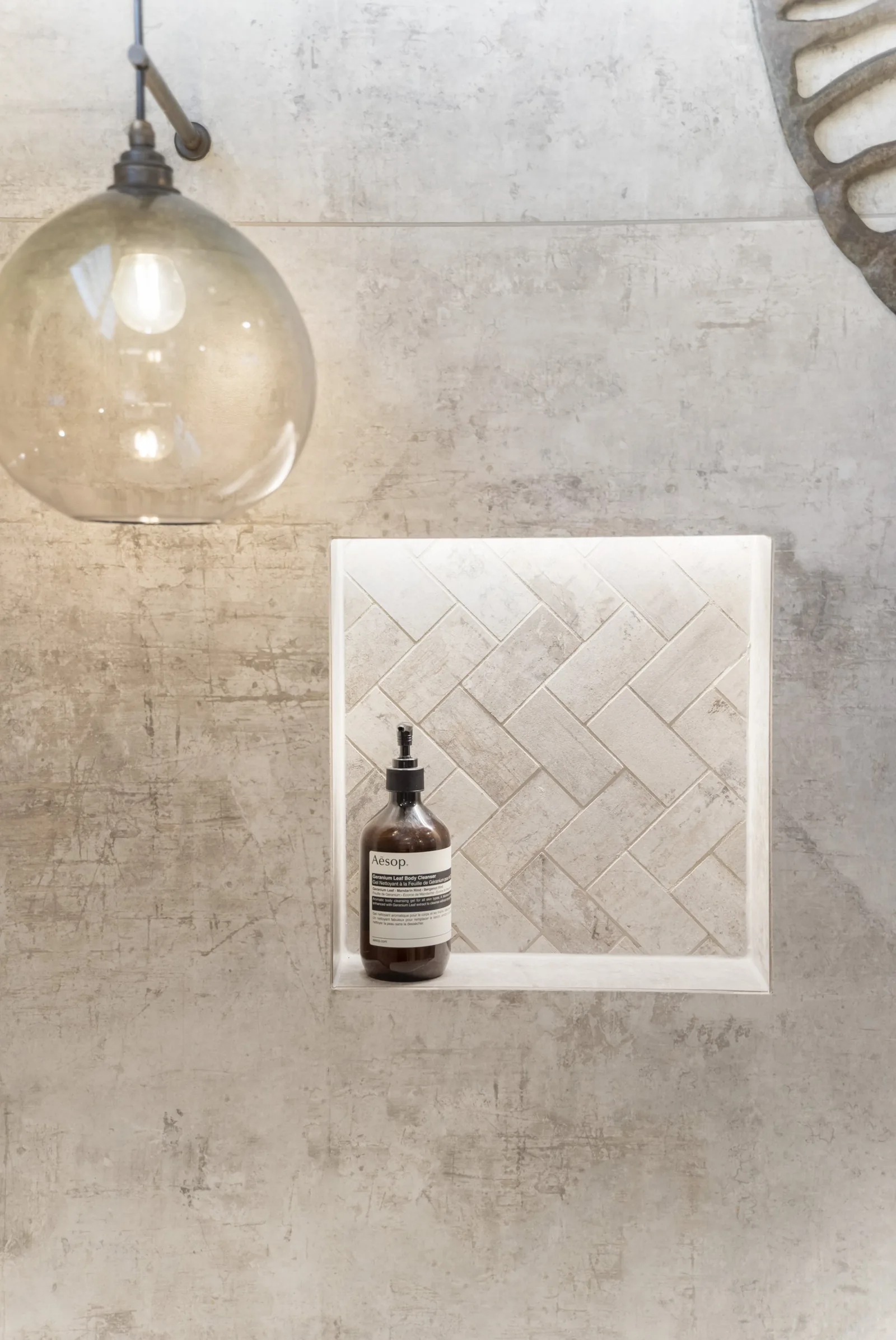
Porcelain and ceramic aren’t the only options. Natural stone like marble and travertine is beautiful, and there’s a reason it turns up in high-end bathrooms. The trade-off is care: stone is porous, needs sealing, and is less forgiving than porcelain. If you love the stone look but want an easier life, modern porcelain now imitates marble and stone convincingly. You get the look with porcelain’s durability and lower maintenance.
So how do you choose?
Start with the location, not the price tag. Is it a floor or a wall? Is it wet? Will it take heavy traffic? Is it outdoors? If the answer to any of those is yes, porcelain is usually the safer choice. If it’s a dry wall or a decorative feature, ceramic opens up more options and saves money.
The other half is the look you’re after, and that’s where it helps to see tiles in the actual space, in your light. You can see how we handle both across our bathroom and kitchen projects, or outdoor tiling for areas that face the weather.
Frequently asked questions
Is porcelain always better than ceramic?
No. It’s better for wet areas, floors and high-traffic spots because it’s denser and less absorbent. For dry walls, splashbacks and decorative features, ceramic is often the smarter, more affordable choice.
Can I use ceramic tiles on a bathroom floor?
It’s not ideal. Bathroom floors get wet and take traffic, which is exactly where porcelain’s low water absorption and hardness pay off. For walls in the same bathroom, ceramic is fine.
Which is better for a kitchen splashback?
Either works, since a splashback isn’t a wet or high-traffic surface. Ceramic gives you more colour and pattern choice for less; porcelain is there if you want maximum durability or a large-format look.
Which is easier to clean and maintain?
Porcelain, generally. Its low porosity resists stains and moisture with just regular cleaning, and it doesn’t need sealing. Ceramic is also low-maintenance on walls. Natural stone asks for more: periodic sealing and a bit more care.
Keep reading
More practical tiling guides from Tarara Tiling
Bathroom Renovation: The Complete Tiling Guide
How the tiling fits into a full bathroom renovation, step by step.
Read the guide →How to Choose the Best Tiler in Auckland
Certifications, reviews and the right questions to ask before you hire.
Read the guide →Signs Your Bathroom Needs Re-Waterproofing
The warning signs that waterproofing has failed, and what to do next.
Read the guide →Want more like this?
Once a season we send one useful tiling tip to your inbox. It covers bathrooms, waterproofing, outdoor tiling and getting a finish that lasts. Practical, current and checked by a working tiler. No spam, no sales pitch.
We email about tiling advice only. Unsubscribe anytime. Your details stay private (NZ Privacy Act).Almost there! Check your inbox to confirm your subscription.
Not sure which tile is right for your project?
Tell us the room and the look you’re after. We’ll help you choose tiles that will last, and lay them to a standard that shows. Free, no-obligation quote across Auckland.